Mediterranean
Šibenik, Krka & Kornati
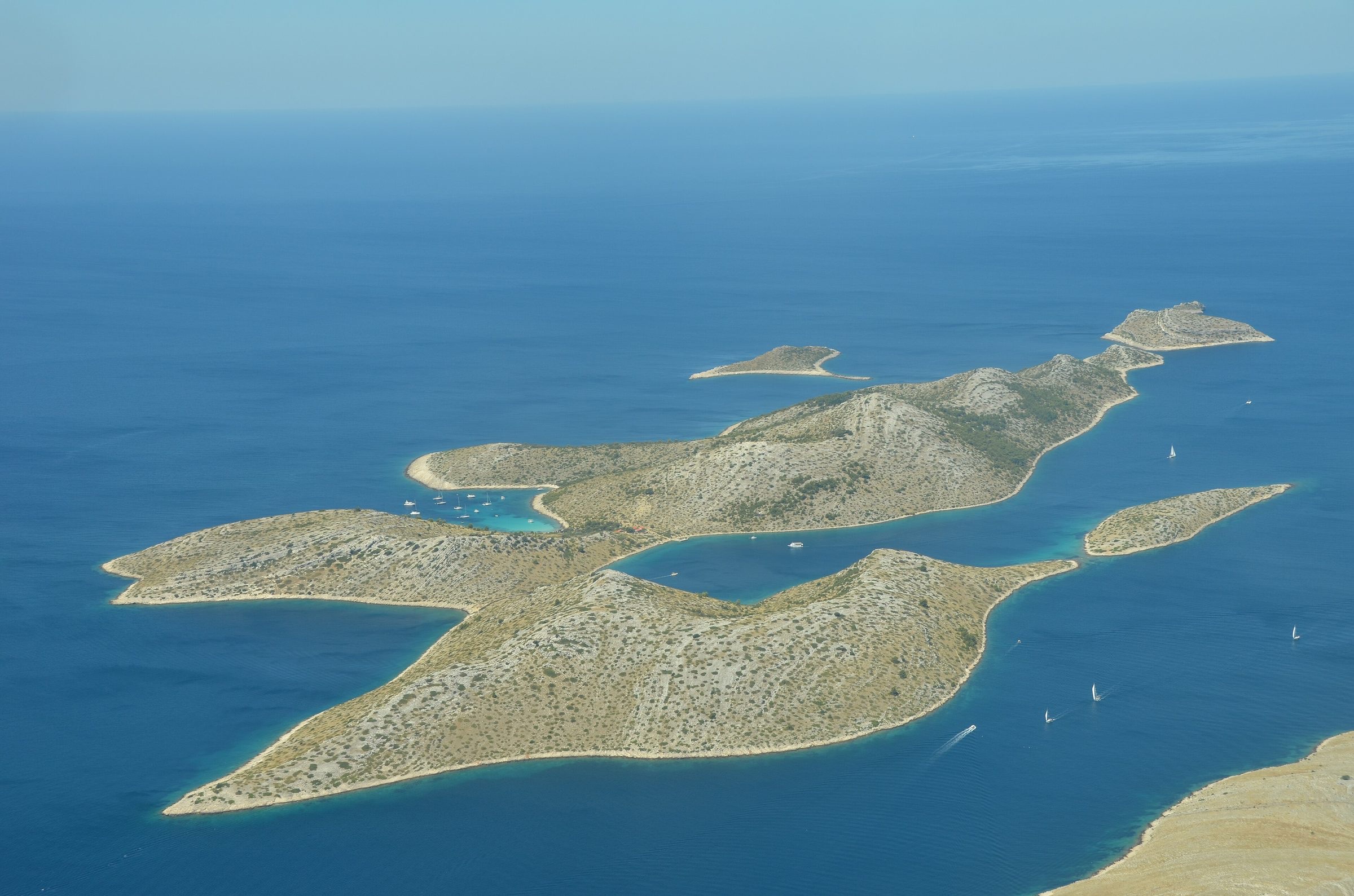
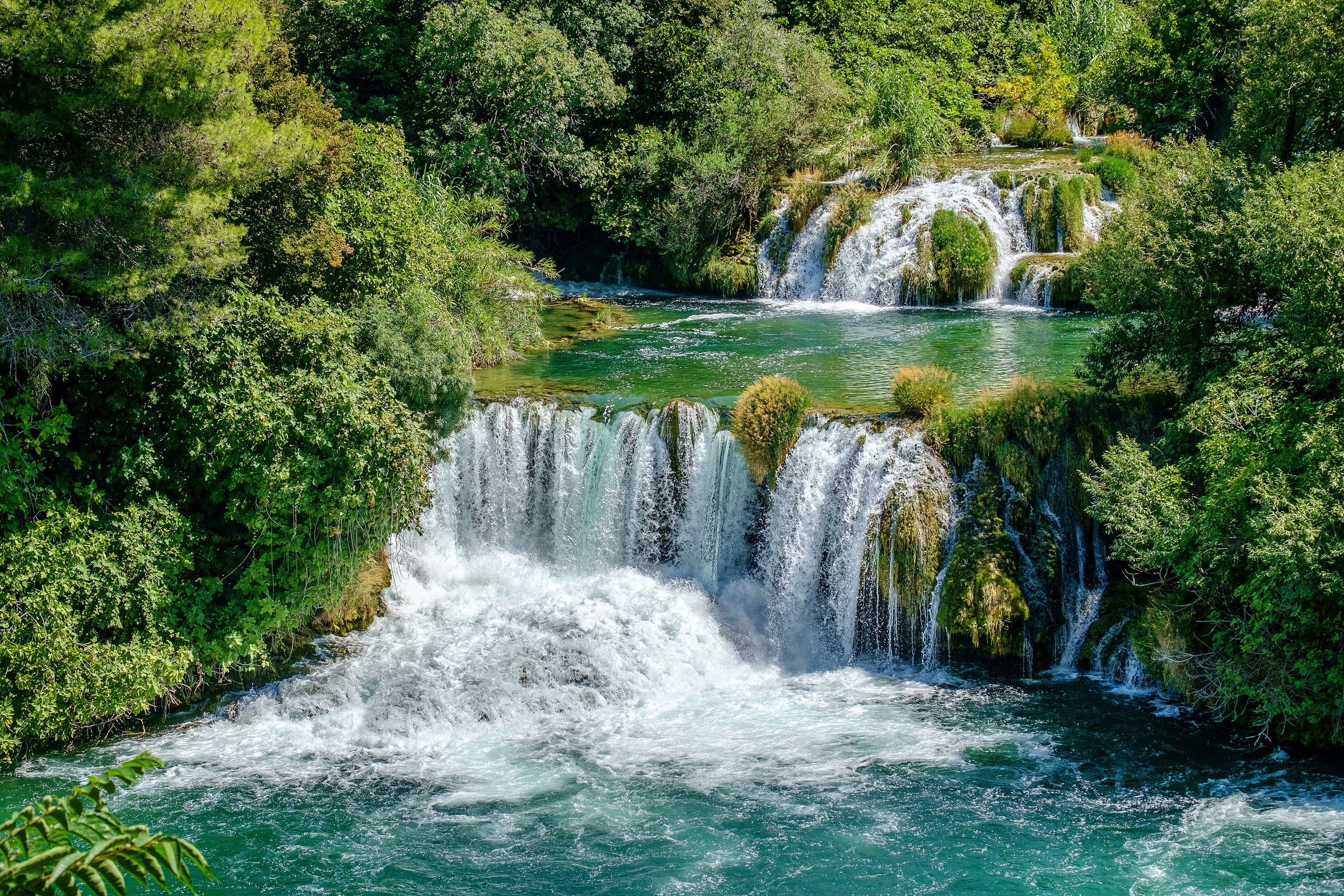
A maze of bare limestone islands, some 90 of them inside Kornati National Park, with restaurants that lay buoys in empty bays. Šibenik's fortress-guarded channel leads up the Krka river to Skradin and the Krka waterfalls, and Telašćica's cliffs and salt lake close the loop. Quieter than the Split islands.
Best months
Difficulty
ModerateRocky shoals and few shops in the park; bora shelter takes planning.
Conditions
Afternoon maestral from the northwest in summer, usually Force 3-4, with calm mornings. The bora can blow hard and suddenly from the northeast, and shelter is thin among the bare Kornati islands. Park tickets are needed in Kornati, Krka and Telašćica. Few shops in the park; provision first.
Itineraries here
Area guide
Croatia — Dalmatia
Croatia
Dalmatia is the long, island-strewn middle and south of Croatia's coast, and one of the easiest and most rewarding charter grounds in Europe. In the north, around Šibenik, Murter and Biograd, the bare, stony Kornati archipelago and the Telašćica inlet on Dugi Otok give a moonscape of some 140 islets, and the Krka river runs inland past Skradin to its travertine waterfalls. The middle, centred on Split and Trogir, is the busiest charter coast in the Mediterranean: Šolta and Brač close by, then Hvar with the Pakleni islands, remote Vis with Komiža and the Blue Cave on Biševo, and Korčula's walled old town. In the south, Dubrovnik leads to the car-free Elaphite islands, the forested national park on west Mljet, and the oyster villages of Ston on the Pelješac peninsula. Distances are short (10-25 nm a day), water is clear and the sea is almost tideless. Nights are spent on marina berths, town quays (stern-to on lazy lines), paid mooring buoys in most popular bays, or at anchor. In July and August the popular harbours fill by early afternoon, and the bora and jugo winds, plus fast-moving summer thunderstorms, need real respect. A recognised skipper's licence and VHF certificate are required to charter bareboat.
Top of the list
- 1Komiža Harbour (Vis)Fishing town under Hum mountain on Vis's west side; the base for the Blue Cave and the outer islets, and a world away from the Split crowds.
- 2Blue Cave (Biševo)A sea cave lit electric blue by sunlight through an underwater opening; visit late morning by the licensed local boats from Mezuporat bay, as private yachts and dinghies cannot enter.
- 3Kornati National ParkAround 140 bare limestone islands and islets, sheer western cliffs, and simple family konobas with their own moorings; the most unusual cruising in the Adriatic.
- 4Skradinski buk (Krka)The great travertine falls of the Krka river; berth at Skradin and take the park boat or walk upstream in the early morning before the tour buses.
- 5Korčula Old Town (Korčula)A walled medieval town on a peninsula, laid out in a herringbone pattern; ACI marina and a town quay right under the walls.
- 6Palmižana (Pakleni Islands)Pine-fringed bay on Sveti Klement with an ACI marina, buoy field and restaurants, a short water-taxi ride from Hvar Town.
- 7Hvar Town (Hvar)Renaissance square, fortress and the liveliest nightlife on the coast; the town quay and buoys are crowded and the harbour is exposed to the south.
- 8Stiniva Cove (Vis)A tiny beach behind a narrow gap in sheer cliffs on Vis's south coast; a calm-day stop at anchor or on a buoy outside, swim or dinghy in.
- 9Mljet National Park lakes (Mljet)Two saltwater lakes with a 12th-century monastery on an islet, reached from the moorings at Polače or Pomena; cycle or walk the lake shores.
- 10Telašćica Nature Park (Dugi Otok)A deep, multi-armed sheltered inlet with a salt lake (Mir) and cliffs over 150 m high on the seaward side; buoys and anchoring zones inside.
- 11Dubrovnik Old TownWalk the city walls and the marble Stradun, then retreat to ACI Marina Dubrovnik up the Rijeka Dubrovačka inlet or anchor at Lokrum in settled weather.
- 12Lopud & Šunj Bay (Elaphites)Car-free Elaphite island with a sandy, shallow bay on its south side and a harbour village opposite; an easy first or last night out of Dubrovnik.
When to go
May to early October is the main season. June and September are the sweet spots: warm sea (about 22-25 °C), a dependable afternoon maestral, and room in the harbours. July and August are hot (low to mid 30s °C), the sea is warmest and harbours, buoy fields and the Blue Cave are at their busiest; plan to be tied up or on a buoy by early afternoon. April, May and October are quieter and cheaper but the bora and jugo are more frequent, nights are cool and some konobas and island services are not yet (or no longer) open. Most charter fleets run from about April to late October; Saturday changeovers are the norm. Winter brings strong, frequent bora and jugo gales and most of the tourist infrastructure on the islands closes.
Weather and hazards
MAESTRAL: the fair-weather summer breeze, a NW thermal wind that usually fills in late morning (around 11 am), blows Force 3-5 through the afternoon and dies near sunset; a light land breeze (burin) often follows at night. No maestral in summer can be a sign that the weather is about to change. BORA (bura): a cold NE fall wind off the coastal mountains, very gusty and often with a clear sky. It can arrive within minutes, sometimes signalled by a cap of cloud sitting on the mountain ridges. Gusts can be two or three times the mean wind, and it is fiercest close under high ground and where it funnels through gaps: the Šibenik approaches, the Split and Brač channels, under Biokovo along the Makarska coast, and the Pelješac channel. It is commonest from autumn to spring but summer bora events of a day or two do happen. It blows offshore, so the sea stays short near the mainland but builds downwind toward the outer islands; choose a harbour or bay sheltered from the NE and expect anchors to drag in the gusts. JUGO (sirocco): a warm, humid SE wind that builds over a day or more, with overcast skies, rain and a long, heavy swell, worst in the south (Dubrovnik, Mljet, Lastovo, Vis) and in the open channels. Many quays and bays that face south or southeast (including Hvar Town) become uncomfortable or untenable in a strong jugo. THUNDERSTORMS (nevera): fast-moving summer storms, most likely after several hot, humid days and in late summer, can bring sudden squalls of 40 kn or more, usually from the W or NW, plus hail and lightning. Watch the sky to the west in the afternoon and evening and have a plan before you pick up a buoy or anchor in an open bay. READING DHMZ: the official forecast from the Croatian Meteorological and Hydrological Service (meteo.hr) covers the north, central and south Adriatic, for open sea and for coastal waters, in Croatian, English, German and Italian; it is updated around 6 am, noon and 6 pm, and is posted in marinas and harbour offices. Winds are given in Beaufort with the gust strength added; for example 'bora 4-5, gusts 7-8' means expect gale-force gusts even though the mean wind is moderate. Read the warning line at the top first. DHMZ's ALADIN model maps are the best local guide for bora; global models used by Windy, Windguru and similar apps often miss local bora acceleration and thunderstorm squalls, so use them as a supplement. Other hazards: heavy ferry and fast-catamaran traffic in the Split, Hvar and Brač channels; crowded buoy fields where boats swing close; strict speed and distance rules near beaches (5 kn within 150 m of the shore, 8 kn from 150-300 m; keep 50 m off marked beaches and 150 m off natural ones); and anchoring is banned where charts mark it and over Posidonia seagrass in protected areas.
Hurricane season
No tropical cyclone season. The Mediterranean does produce occasional 'medicanes' (tropical-like storms), most often in autumn, but they rarely reach the Adriatic. The real storm risk is the bora and jugo, which blow hardest and longest from October to April and can reach gale or storm force, and violent summer thunderstorms. Autumn deep lows can bring prolonged jugo, rain and high water levels in harbours.
Entry and clearance
Croatia has been in the EU and the Schengen Area since 1 January 2023. Yachts arriving from or leaving for another Schengen country (for example Italy or Slovenia) face no border check. A boat arriving from outside Schengen (for example Montenegro) must sail by the shortest route to a port with a border crossing point, clear police and customs, and must not anchor on the way except in an emergency. Ports of entry in or near Dalmatia include Zadar, Šibenik, Split, Ploče, Dubrovnik (Gruž), Cavtat, Vis and Komiža; some, like Vis and Komiža, work only in season, and Cavtat has very little room on its customs quay, so Gruž is often easier. Non-EU visitors are limited to 90 days in any 180 across the Schengen Area, and the EU's biometric Entry/Exit System now registers non-EU travellers at the border. On arrival a private foreign yacht must register its arrival in the e-Nautika system (or at the harbour master's office), pay the navigation safety fee, pay tourist tax, and keep a crew and passenger list; the skipper must have the list certified by the harbour master before departure, and any change of crew should be reported. On charter, the company prepares the crew list and boat papers at check-in. LICENCES: the skipper of a bareboat charter needs a recognised certificate of competence, such as the ICC, an RYA Day Skipper or higher, a US Sailing or ASA International Proficiency Certificate (IPC), or a national licence on the Croatian ministry's recognised list. Someone on board (often the skipper) must also hold a VHF radio operator's certificate such as the SRC, because charter yachts carry VHF. Charter companies check both at check-in and have the final say; some want a second licensed crew member on larger catamarans and motor yachts. Without them, hire a local skipper.
Permits and fees
NAVIGATION SAFETY FEE (still called the 'vignette'): charged once per calendar year on every foreign yacht and boat, based on length and engine power, however long you stay. You get the payment details when you register the arrival in e-Nautika (enautika.pomorstvo.hr) or at a harbour master's office, and must pay within seven working days (card payment online). Tenders over 2.5 m long or with engines over 5 kW may need their own fee. Charter yachts are Croatian-registered, so the fee is the company's job. TOURIST TAX: due when anyone sleeps aboard a boat over 7 m; private boats pay online at nautika.evisitor.hr, either as a lump sum by boat length or per person per night, whichever is cheaper, and keep the receipt on board. On charter the company collects tourist tax from the crew at check-in. Inspections are active: a one-day check by all harbour master's offices on 29 July 2026 found 182 offences in 382 inspections and about €79,000 in fines, covering papers, skipper qualifications, crew numbers and sewage discharge. NATIONAL AND NATURE PARKS: Kornati National Park charges a ticket per boat per day by length; 2026 advance prices per mySea are €95 in high season (June-September) and €50 in low season for an 11-18 m boat (€65/€30 for 7-11 m), and buying on the water costs considerably more, so buy in advance online. Some konobas inside the park sell tickets or offset part of the fee against a meal; do not count on it. Telašćica Nature Park sells a separate ticket and Kornati/Telašćica combined tickets exist. Krka National Park: yachts can go up the river only as far as Skradin; the full-day adult ticket is about €40 in peak season (June-September), and about €30 after 3 pm, according to guides (2026; verify on npkrka.hr). Mljet National Park charges a per-person entry (including the boat to St Mary's islet) plus a vessel ticket; buy them at Polače or Pomena or online (np-mljet.hr publishes the 2026 lists). The Blue Cave on Biševo has its own entry ticket and is visited only by local boat. Lastovo is a nature park with its own fee. BUOY FIELDS: most popular bays now have concession buoy fields, with an attendant who comes by RIB in the afternoon to collect cash or card; prices vary by length and season, and catamarans usually pay about 1.5 times the monohull rate. Many fields include rubbish collection; keep the receipt on board. Many konobas own buoys or a quay that is free if you eat there. Anchoring outside buoy fields and away from ports is generally free, but never anchor between buoys or where charts mark anchoring as banned. Reported newer rules also ban tying lines to trees or rocks in places. Town quays and marinas charge by length per day; ACI and D-Marin marinas are among the dearest in the Med in July and August.
Tides and currents
Tides are small for navigation, typically a few tens of centimetres in Dalmatia (larger toward the north Adriatic), but strong jugo and low pressure can raise the sea level noticeably and bora can lower it, which matters on shallow town quays. Currents are generally weak, with a slow general flow northward along the Croatian side of the Adriatic; strong winds set up local surface currents of 1 kn or more in the channels, especially in bora and jugo. Expect a current in narrow passages such as the St Anthony channel into Šibenik and on the Krka river below Skradin. Official tables come from the Hydrographic Institute (HHI, Split).
Money
Euro (EUR) since 1 January 2023, replacing the kuna. Cards are widely accepted in marinas, restaurants and shops, and buoy-field attendants increasingly take cards, but carry cash for small konobas, Kornati tickets bought on the water, island buses and taxis. ATMs are in all towns; avoid the stand-alone Euronet-style ATMs that charge high fees and push dynamic currency conversion.
Radio and phones
Distress: VHF 16 (DSC on 70), the toll-free maritime search and rescue number 195, or 112; all reach MRCC Rijeka, the national rescue coordination centre, which is staffed 24 hours. The official nIS (Nautical Information Service) app can send your position with an emergency call. Coast radio stations, run by Plovput, keep watch 24 hours: Rijeka Radio (9AR), Split Radio (9AS, which also runs the Croatian NAVTEX on 518 kHz, stations Q and F) and Dubrovnik Radio (9AD). They read weather forecasts and warnings in Croatian and English several times a day after an announcement on channel 16, on working channels such as Split 07, 21, 23, 28 and 81 and Dubrovnik 04, 07 and 85 (schedules differ between sources; check Plovput or the marina board). Harbour master's offices also run continuous recorded forecasts in Croatian, English, German and Italian, about every 15 minutes: channel 67 for the central Adriatic (Split), 73 for the south (Dubrovnik) and 69 for the north (verify locally). Marinas usually answer on VHF 17. Mobile coverage (Hrvatski Telekom, A1, Telemach) is good along the coast and on most islands, with gaps in the outer Kornati and parts of Lastovo; EU roaming applies.
Charter bases
- ACI Marina SplitSplit, Meje peninsula, about 20-30 minutes from Split airport (SPU)Ultra Sailing (main base and sailing school), Dalmatino Sailing (Pitter partner base), Orvas Yachting, many independents
- Marina KaštelaKaštel Gomilica, between Split and Trogir, close to Split airport (SPU)Noa Yachting (Pitter partner base), Croatia Yachting, Adriatic Sailing, many independents
- ACI Marina TrogirČiovo island, opposite Trogir old town; 10 minutes from Split airport (SPU)Pitter Yachtcharter, Orvas Yachting, many independents
- Marina AganaMarina village, about 10 km west of TrogirSunsail, The Moorings
- D-Marin MandalinaŠibenik, on the Mandalina peninsula south of the old townMare Yachting (Pitter partner base), many independents
- Marina KornatiBiograd na Moru, about 30 km south of Zadar airport (ZAD)Pitter Yachtcharter (its largest base), Charter Novak, about a dozen charter companies
- Marina HraminaMurter town, Murter island (bridged to the mainland), gateway to the KornatiMarina Hramina charter (the marina's own fleet), Pitter Yachtcharter, independents
- ACI Marina DubrovnikKomolac, up the Rijeka Dubrovačka inlet, about 6 km from the old town and 23 km from Dubrovnik airport (DBV)Sunsail, The Moorings (Dubrovnik base), Ultra Sailing, independents
Getting there
- Split Airport (Kaštela) — SPUThe main charter gateway, between Trogir and Kaštela: 10 minutes to ACI Trogir and Marina Kaštela, about 30 minutes to ACI Marina Split and 20 minutes to Marina Agana. Many seasonal direct flights from across Europe, mostly on Saturdays; Saturday afternoon traffic is heavy.
- Dubrovnik Airport (Čilipi) — DBVFor ACI Marina Dubrovnik (about 30 minutes by car, longer through the city traffic) and the Elaphites, Mljet and Korčula. Seasonal flights from much of Europe and some from North America.
- Zadar Airport — ZADClosest for Biograd (about 30 minutes), Murter (about 1 hour) and the Kornati; Šibenik is about 1 hour. Mostly low-cost seasonal flights.
Charts and guides
- Croatian Hydrographic Institute (HHI) official charts and small-craft chart folios, plus its official pilot (Peljar)
- nIS (Nautical Information Service) app — official navigation warnings, rules and harbour master contacts
- Trevor and Dinah Thompson, Adriatic Pilot (Imray) — Croatia, Slovenia, Montenegro and the Italian coast
- Karl-Heinz Beständig, 777 Harbours and Anchorages (Croatia, Slovenia, Montenegro)
- Imray and Navionics/C-Map electronic charts for the Croatian coast
- meteo.hr (DHMZ) Adriatic forecasts and ALADIN model maps
- Navily and Noforeignland community reviews of buoy fields, konobas and anchorages
Sample routes
- 7-day Split islands loop (Šolta, Brač, Vis, Hvar)Day 1 · ACI Marina Split → Milna Harbour (Brač) · 10 nmThrough the Split Gate between Šolta and Brač; stone harbour village with a marina and town quay.Day 2 · Milna Harbour (Brač) → Vis Town (Vis) · 23 nmOpen crossing to Vis; stern-to on the long Vis quay or a buoy, Roman remains and Kut's restaurants.Day 3 · Vis Town (Vis) → Komiža Harbour (Vis) · 20 nmSouth coast past Stiniva Cove, then the Blue Cave on Biševo by local boat from Mezuporat; evening in Komiža.Day 4 · Komiža Harbour (Vis) → Palmižana (Pakleni Islands) · 24 nmLeave early; ACI Palmižana or a buoy, water taxi to Hvar Town for the fortress and nightlife.Day 5 · Palmižana (Pakleni Islands) → Stari Grad (Hvar) · 16 nmRound the west end of Hvar into the long Stari Grad inlet; the oldest town in Croatia and its UNESCO plain.Day 6 · Stari Grad (Hvar) → Nečujam Bay (Šolta) · 16 nmSwim stop at Bobovišća (Brač) or Šešula; quiet buoys and konobas in Nečujam.Day 7 · Nečujam Bay (Šolta) → ACI Marina Split · 10 nmShort hop back; fuel up before the Saturday rush and walk Diocletian's Palace.
- 7-day Kornati & Krka from ŠibenikDay 1 · D-Marin Mandalina (Šibenik) → Skradin (Krka) · 9 nmThrough the St Anthony channel and up the Krka river; berth at ACI Skradin or the town quay.Day 2 · Skradin (Krka) → Prvić Luka (Prvić) · 12 nmEarly park boat to Skradinski buk before the crowds; afternoon down river to a quiet island village.Day 3 · Prvić Luka (Prvić) → Žut (Kornati) · 20 nmInto the Kornati via the Murter sea; ACI Žut or a konoba buoy on the island.Day 4 · Žut (Kornati) → Telašćica Nature Park (Dugi Otok) · 15 nmSwim at Lojena (Levrnaka), then the Mir salt lake and the cliffs; buoys inside the inlet.Day 5 · Telašćica Nature Park (Dugi Otok) → Piškera (Kornati) · 12 nmDown the spine of the national park past the western cliffs; ACI Piškera or Vrulje on Kornat.Day 6 · Piškera (Kornati) → Kaprije (Kaprije) · 18 nmBack through the Šibenik islands to a sheltered village harbour with buoys.Day 7 · Kaprije (Kaprije) → D-Marin Mandalina (Šibenik) · 8 nmMorning swim, then the St Anthony channel and St Nicholas fortress back to base.
- 7-day Dubrovnik, Elaphites, Mljet & KorčulaDay 1 · ACI Marina Dubrovnik → Lopud & Šunj Bay (Elaphites) · 9 nmDown the inlet and past Koločep; anchor or buoy in Šunj or on the harbour side.Day 2 · Lopud & Šunj Bay (Elaphites) → Polače (Mljet) · 20 nmRoman palace ruins on the quay; restaurant buoys and the national park ticket office.Day 3 · Polače (Mljet) → Korčula Old Town (Korčula) · 20 nmAcross the Mljet channel to the walled town; ACI Korčula or the town quay.Day 4 · Korčula Old Town (Korčula) → Pomena (Mljet) · 14 nmMorning in Korčula, then Pomena; cycle or walk to the lakes and St Mary's islet.Day 5 · Pomena (Mljet) → Okuklje (Mljet) · 12 nmAlong Mljet's north coast to a small, well-sheltered cove with konoba moorings.Day 6 · Okuklje (Mljet) → Šipanska Luka (Šipan) · 18 nmBack to the Elaphites; Šipan's long inlet and its village.Day 7 · Šipanska Luka (Šipan) → ACI Marina Dubrovnik · 10 nmLunch stop at Koločep or Lokrum, then up the Rijeka Dubrovačka to base.
Places in Croatia — Dalmatia
- ACI Marina Dubrovnik (Komolac)Marina · Dubrovnik (mainland)
- ACI Marina Jezera (Murter)Marina · Murter
- ACI Marina Korčula (Korčula)Marina · Korčula
- ACI Marina Palmižana (Sveti Klement)Marina · Pakleni Islands (Sveti Klement, Marinkovac, Jerolim)
- ACI Marina Piškera (Kornati)Marina · Kornat & the Kornati islands
- ACI Marina SkradinMarina · Skradin & Krka
- ACI Marina SlanoMarina · Slano (mainland)
- ACI Marina SplitMarina · Split (mainland)
- ACI Marina Trogir (Čiovo)Marina · Trogir & Čiovo
- ACI Marina VodiceMarina · Šibenik (mainland)
- ACI Marina ŽutMarina · Žut
- Antonio Patak restaurant (Ždrilca, Marinkovac)Eat · Pakleni Islands (Sveti Klement, Marinkovac, Jerolim)
- B-17 Bomber Wreck (Rukavac)Dive · Vis
- Bačvice beach (Split)Beach · Split (mainland)
- Badija Island Anchorage (Badija)Anchorage · Badija
- Badija Monastery & Deer (Badija)Wildlife · Badija
- Banje BeachBeach · Dubrovnik (mainland)
- Barone Fortress (Šibenik)View · Šibenik (mainland)
- Biograd na Moru TownStores · Biograd na Moru (mainland)
- Blaca Bay & Blaca Hermitage (Brač)Hike · Brač
- Blue Cave (Modra špilja, Biševo)Landmark · Biševo
- Blue Cave (Plava Špilja), KoločepSnorkel · Koločep
- Blue Cave Tickets & Rules (Mezuporat)Permit · Biševo
- Bobovišća (Brač)Anchorage · Brač
- Bol & Zlatni Rat beach (Brač)Beach · Brač
- Bol harbour (Brač)Anchorage · Brač
- Bota Šare, Mali StonEat · Pelješac (Ston, Mali Ston)
- BroceAnchorage · Pelješac (Ston, Mali Ston)
- Budikovac Lagoon (Budikovac)Anchorage · Budikovac
- Cavtat Harbour (Luka)Anchorage · Cavtat (mainland)
- Cavtat Port of Entry (seasonal)Permit · Cavtat (mainland)
- Croatian anchoring rules (2025) – Dubrovnik areaPermit · Dubrovnik (mainland)
- Croatian Anchoring Rules 2025 (Vis area)Permit · Vis
- D-Marin Mandalina (Šibenik)Marina · Šibenik (mainland)
- Dead Sea (Mrtvo More), LokrumSnorkel · Lokrum
- Donje Čelo, KoločepAnchorage · Koločep
- Dragon's Eye Lake (Rogoznica)Landmark · Primošten & Rogoznica (mainland)
- Dubovica beach (Hvar)Beach · Hvar
- Dubrovnik Old Port (Stara Luka) – rules for yachtsPermit · Dubrovnik (mainland)
- Dubrovnik Old Town & City WallsLandmark · Dubrovnik (mainland)
- Dugi Otok Cliffs (Telašćica)View · Dugi Otok (Telašćica, Sali)
- Faust Vrančić Memorial Centre (Prvić Luka)Landmark · Prvić
- Fort George (Vis)Landmark · Vis
- Fort LovrijenacLandmark · Dubrovnik (mainland)
- Fort Royal, LokrumView · Lokrum
- Fortica fortress (Španjola, Hvar)Hike · Hvar
- Gornje Čelo, KoločepAnchorage · Koločep
- Gradina Bay (Vela Luka)Anchorage · Korčula
- Green Cave (Ravnik)Snorkel · Ravnik
- Grohote village (Šolta)Stores · Šolta
- Gršćica (Korčula)Anchorage · Korčula
- Gruž Harbour – port of entryPermit · Dubrovnik (mainland)
- Gruž Market (Placa Gruž)Stores · Dubrovnik (mainland)
- Gverović-Orsan Restaurant, ZatonEat · Dubrovnik (mainland)
- Hiljača Bays (Žut)Anchorage · Žut
- HodiljeAnchorage · Pelješac (Ston, Mali Ston)
- Hvar harbour anchoring ban (Gališnik)Permit · Hvar
- Hvar Harbour Master office (Lučka ispostava Hvar)Permit · Hvar
- Hvar main square, cathedral & Arsenal (Hvar)Landmark · Hvar
- Hvar Town harbour (Hvar)Anchorage · Hvar
- Hvar Town market (Hvar)Stores · Hvar
- INA Bol fuel station (Brač)Service · Brač
- INA Fuel Dock, KomolacService · Dubrovnik (mainland)
- INA Fuel Station (Korčula)Service · Korčula
- INA Fuel Station (Vela Luka)Service · Korčula
- INA Fuel Station (Vis Town)Service · Vis
- INA Hvar fuel station (Križna luka)Service · Hvar
- INA Marine Fuel, GružService · Dubrovnik (mainland)
- INA Milna-marina fuel station (Brač)Service · Brač
- INA Šolta fuel station (Rogač)Service · Šolta
- INA Split-obala fuel station (Split)Service · Split (mainland)
- INA Trogir-marina fuel station (Čiovo)Service · Trogir & Čiovo
- INA Vrboska-marina fuel station (Hvar)Service · Hvar
- Issa Roman Baths (Vis Town)Landmark · Vis
- Jelsa harbour (Hvar)Anchorage · Hvar
- Jelsa Wine Festival (Hvar)Event · Hvar
- Jerolim (Pakleni Islands)Beach · Pakleni Islands (Sveti Klement, Marinkovac, Jerolim)
- Kamenica Beach (Komiža)Beach · Vis
- Kapetanova Kuća, Mali StonEat · Pelješac (Ston, Mali Ston)
- Kaprije Harbour (Kaprije)Anchorage · Kaprije
- Kašjuni beach (Split)Beach · Split (mainland)
- KobašAnchorage · Pelješac (Ston, Mali Ston)
- Komiža Bay Mooring Buoys (Vis)Anchorage · Vis
- Komiža Fishermen's Museum (Kaštel)Landmark · Vis
- Komiža Harbour (Vis)Marina · Vis
- Komiža Shops (Komiža)Stores · Vis
- Konoba Ante (Vrulje)Eat · Kornat & the Kornati islands
- Konoba Bako (Komiža)Eat · Vis
- Konoba Beban (Lopatica, Kornat)Eat · Kornat & the Kornati islands
- Konoba Jastožera (Komiža)Eat · Vis
- Konoba Magić (Podstražje)Eat · Vis
- Konoba Mare (Katina)Eat · Katina (Proversa)
- Konoba Opat (Kornat)Eat · Kornat & the Kornati islands
- Konoba Pojoda (Kut)Eat · Vis
- Konoba Pol Murvu (Žena Glava)Eat · Vis
- Konoba Porat (Biševo)Eat · Biševo
- Konoba Senko Karuza (Mala Travna)Eat · Vis
- Konoba Šešula & Šišmiš (Šešula Bay, Šolta)Eat · Šolta
- Konoba Stončica (Vis)Eat · Vis
- Korčula Old Town (Korčula)Landmark · Korčula
- Korčula Town Supermarkets (Korčula)Stores · Korčula
- Korčula West Harbour (Korčula)Marina · Korčula
- Kornati National Park TicketPermit · Kornat & the Kornati islands
- Koruna Tower, Mali StonLandmark · Pelješac (Ston, Mali Ston)
- Krapanj Harbour (Brodarica)Anchorage · Krapanj
- Kravljačica (Kornat)Anchorage · Kornat & the Kornati islands
- Kremena Bay (Lastovo)Anchorage · Lastovo
- Krka National Park Ticket & Boat RulesPermit · Skradin & Krka
- Krknjaši / Blue Lagoon (Drvenik Veli)Anchorage · Trogir & Čiovo
- Kruševica (Telašćica)Eat · Dugi Otok (Telašćica, Sali)
- Kut Quay (Vis)Marina · Vis
- Kuta Bay (Mali Ston Bay)Anchorage · Pelješac (Ston, Mali Ston)
- Laganini Lounge Bar & Fish House (Vinogradišće, Sveti Klement)Eat · Pakleni Islands (Sveti Klement, Marinkovac, Jerolim)
- Lastovo Islands Nature Park Fee (Lastovo)Permit · Lastovo
- Lastovo Town & Fumari (Lastovo)Landmark · Lastovo
- Lavsa (Kornati)Anchorage · Lavsa (Kornati)
- Levrnaka: Anica Bay & Konoba LevrnakaEat · Levrnaka (Kornati)
- Livka Bay (Šolta)Anchorage · Šolta
- Lojena Beach (Levrnaka)Beach · Levrnaka (Kornati)
- Lokrum IslandLandmark · Lokrum
- Lokva Bay (Pomena)Anchorage · Mljet
- Lopud Harbour (Uvala Lopud)Anchorage · Lopud
- Lovrečina beach (Brač)Beach · Brač
- Lučica (Lastovo)Anchorage · Lastovo
- Lučice Bay & Konoba Lučica (Brač)Anchorage · Brač
- Lumbarda Grk Wineries (Lumbarda)Tour · Korčula
- Magrovica & Taverna Goro (Telašćica)Eat · Dugi Otok (Telašćica, Sali)
- Mala Nozdra (Kaprije)Eat · Kaprije
- Mali Lago (Lastovo)Anchorage · Lastovo
- Mali Ston Bay Oyster FarmsTour · Pelješac (Ston, Mali Ston)
- Mali Ston HarbourAnchorage · Pelješac (Ston, Mali Ston)
- Malo Jezero (Small Lake) SwimBeach · Mljet
- Mamato Bar (Ždrilca, Marinkovac)Bar · Pakleni Islands (Sveti Klement, Marinkovac, Jerolim)
- Mana Cliffs & Film Village (Kornati)View · Mana (Kornati)
- Marina Baotić (Seget Donji)Marina · Trogir & Čiovo
- Marina Betina (Murter)Marina · Murter
- Marina Frapa (Rogoznica)Marina · Primošten & Rogoznica (mainland)
- Marina Frapa Dubrovnik (Gruž)Marina · Dubrovnik (mainland)
- Marina Hramina (Murter)Marina · Murter
- Marina Kaštela (Kaštela)Marina · Kaštela (mainland)
- Marina Korkyra (Vela Luka)Marina · Korčula
- Marina Kornati (Biograd na Moru)Marina · Biograd na Moru (mainland)
- Marina Kremik (Primošten)Marina · Primošten & Rogoznica (mainland)
- Marina Lumbarda (Korčula)Marina · Korčula
- Marina TribunjMarina · Šibenik (mainland)
- Marina Vlaška (Milna, Brač)Marina · Brač
- Marjan hill & Prva Vidilica viewpoint (Split)Hike · Split (mainland)
- Martinis Marchi restaurant (Maslinica, Šolta)Eat · Šolta
- Maslinica & Martinis Marchi marina (Šolta)Marina · Šolta
- Medvidina Cave (Biševo)Wildlife · Biševo
- Meneghello (Palmižana, Sveti Klement)Eat · Pakleni Islands (Sveti Klement, Marinkovac, Jerolim)
- Mezuporat Bay (Biševo)Anchorage · Biševo
- Milna (Hvar) / Mala MilnaAnchorage · Hvar
- Milna & ACI Marina Milna (Brač)Marina · Brač
- Milna & Zaglav Beach (Vis)Beach · Vis
- Mir Bay (Telašćica)Anchorage · Dugi Otok (Telašćica, Sali)
- Mir Salt Lake (Telašćica)Landmark · Dugi Otok (Telašćica, Sali)
- Mljet National Park – Lakes, tickets & vessel feesPermit · Mljet
- Monastery of Our Lady of Angels (Orebić)View · Pelješac (Orebić)
- Montokuc LookoutHike · Mljet
- Moro Beach Bar (Stupe)Bar · Korčula
- Mount Hum Viewpoint (Vis)View · Vis
- Mrčara (Lastovo)Eat · Lastovo
- Mrduja rope pull (Splitska vrata)Event · Brač
- Muna Harbour (Žirje)Anchorage · Žirje
- Murter TownStores · Murter
- Nečujam Bay (Šolta)Anchorage · Šolta
- Odysseus Cave (Odisejeva Špilja)Snorkel · Mljet
- Okrug Gornji beach (Čiovo)Beach · Trogir & Čiovo
- OkukljeAnchorage · Mljet
- Opat Bay (Kornat)Anchorage · Kornat & the Kornati islands
- Orebić Harbour (Pelješac)Marina · Pelješac (Orebić)
- Orebić Maritime Museum (Orebić)Landmark · Pelješac (Orebić)
- Orebić Supermarkets (Orebić)Stores · Pelješac (Orebić)
- Palmižana / Vinogradišće Bay anchorage (Sveti Klement)Anchorage · Pakleni Islands (Sveti Klement, Marinkovac, Jerolim)
- Parja Submarine Tunnel (Vis)Landmark · Vis
- Pasadur (Lastovo)Marina · Lastovo
- Pelješac BridgeLandmark · Pelješac (Ston, Mali Ston)
- Piškera cove Roman fishpond (Nečujam, Šolta)Snorkel · Šolta
- Pokonji Dol beach (Hvar)Beach · Hvar
- Polače HarbourAnchorage · Mljet
- Pomena HarbourAnchorage · Mljet
- Porat Bay (Biševo)Anchorage · Biševo
- Portoč, Lokrum (day anchorage)Anchorage · Lokrum
- Potkućina & Borovnjaci (Kakan)Anchorage · Kaprije
- Povlja - Luka Bay (Brač)Anchorage · Brač
- Prapratno BayAnchorage · Pelješac (Ston, Mali Ston)
- Primošten HarbourAnchorage · Primošten & Rogoznica (mainland)
- Prižba (Korčula)Anchorage · Korčula
- Proizd Islet (Korčula)Beach · Korčula
- ProžuraAnchorage · Mljet
- Prvić Luka (Prvić)Anchorage · Prvić
- Pržina Beach (Lumbarda)Beach · Korčula
- Pučišća (Brač)Anchorage · Brač
- Pupnatska Luka (Korčula)Anchorage · Korčula
- Račišće (Korčula)Anchorage · Korčula
- Raduča Beaches (Primošten)Beach · Primošten & Rogoznica (mainland)
- Rat Peninsula Walk, CavtatHike · Cavtat (mainland)
- Ravni Žakan (Kornati)Anchorage · Kornat & the Kornati islands
- Rogač harbour (Šolta)Anchorage · Šolta
- Rogačić Bay (Vis)Anchorage · Vis
- Rogoznica HarbourAnchorage · Primošten & Rogoznica (mainland)
- Roki's (Plisko Polje)Eat · Vis
- Roman Palace, PolačeLandmark · Mljet
- Roški slap (Krka)Landmark · Skradin & Krka
- Rukavac Bay (Vis)Anchorage · Vis
- Salbunara (Biševo)Anchorage · Biševo
- Sali Harbour (Dugi Otok)Anchorage · Dugi Otok (Telašćica, Sali)
- Saplun & the Lastovnjaci (Lastovo)Anchorage · Lastovo
- SaplunaraAnchorage · Mljet
- Saplunara Beaches (Velika & Mala Saplunara)Beach · Mljet
- Šćedro - Lovišće BayAnchorage · Šćedro
- Šćedro - Mostir Bay & Konoba MostirEat · Šćedro
- Šćedro - Porteruša BayBeach · Šćedro
- Šepurine (Prvić)Anchorage · Prvić
- Šešula Bay (Šolta)Anchorage · Šolta
- Šibenik City MarketStores · Šibenik (mainland)
- Šibenik Old Town & St James CathedralLandmark · Šibenik (mainland)
- Šipanska Luka, ŠipanAnchorage · Šipan
- Šipnate (Kornat)Anchorage · Kornat & the Kornati islands
- Skradin TownStores · Skradin & Krka
- Skradinski bukLandmark · Skradin & Krka
- Skrivena Luka (Lastovo)Anchorage · Lastovo
- Slano Bay AnchorageAnchorage · Slano (mainland)
- Smokvica Konobas (Kornati)Eat · Kornat & the Kornati islands
- Sobra Fuel StationService · Mljet
- Sobra HarbourAnchorage · Mljet
- Soline Bay (Sveti Klement)Anchorage · Pakleni Islands (Sveti Klement, Marinkovac, Jerolim)
- Split fish market (Ribarnica, Split)Stores · Split (mainland)
- Split green market (Pazar, Split)Stores · Split (mainland)
- Split Harbour Master's Office (Lučka kapetanija Split)Permit · Split (mainland)
- Split old town / Diocletian's Palace (Split)Landmark · Split (mainland)
- Srđ Hill & Dubrovnik Cable CarView · Dubrovnik (mainland)
- Srebrna Beach (Vis)Beach · Vis
- St Mary's Islet & Benedictine MonasteryLandmark · Mljet
- St Michael's Fortress (Šibenik)View · Šibenik (mainland)
- St Nicholas Fortress & St Anthony's ChannelLandmark · Šibenik (mainland)
- Stari Grad harbour (Hvar)Anchorage · Hvar
- Stari Grad Plain (Hvar)Landmark · Hvar
- Statival (Kornat)Anchorage · Kornat & the Kornati islands
- Stiniva Cove (Vis)Beach · Vis
- Stipanska Bay & Carpe Diem Beach (Marinkovac)Bar · Pakleni Islands (Sveti Klement, Marinkovac, Jerolim)
- Stomorska (Šolta)Anchorage · Šolta
- Ston HarbourAnchorage · Pelješac (Ston, Mali Ston)
- Ston Salt FestivalEvent · Pelješac (Ston, Mali Ston)
- Ston Salt Pans (Solana Ston)Landmark · Pelješac (Ston, Mali Ston)
- Ston WallsLandmark · Pelješac (Ston, Mali Ston)
- Stončica Bay (Vis)Anchorage · Vis
- Stončica Lighthouse Walk (Vis)View · Vis
- Strižnja (Kornat)Anchorage · Kornat & the Kornati islands
- Struga Lighthouse (Lastovo)Hike · Lastovo
- Stupica Mala (Žirje)Anchorage · Žirje
- Stupica Vela (Žirje)Anchorage · Žirje
- Suđurađ, ŠipanAnchorage · Šipan
- Šunj Bay, LopudAnchorage · Lopud
- Supetar (Brač)Stores · Brač
- Sveta Nedjelja (Hvar)Anchorage · Hvar
- Sveti Ante Bay (Pašman)Anchorage · Pašman
- Sveti Ilija Hike (Pelješac)Hike · Pelješac (Orebić)
- Taršće Bay (Sveti Klement)Anchorage · Pakleni Islands (Sveti Klement, Marinkovac, Jerolim)
- Tatinja Bay (Šolta)Anchorage · Šolta
- Telašćica Nature Park TicketPermit · Dugi Otok (Telašćica, Sali)
- Tiha Bay (Starigrad bay, Hvar)Anchorage · Hvar
- Tiha Bay (Vis)Anchorage · Vis
- Tiha Bay, CavtatAnchorage · Cavtat (mainland)
- Tisno Harbour & Bridge (Murter)Anchorage · Murter
- Tito's Cave (Vis)Hike · Vis
- Tkon Harbour (Pašman)Anchorage · Pašman
- Tomasovac & Suha Punta (Kornat)Anchorage · Kornat & the Kornati islands
- Toto's (Palmižana, Sveti Klement)Eat · Pakleni Islands (Sveti Klement, Marinkovac, Jerolim)
- Tratica (Kakan)Anchorage · Kaprije
- Tratinska (Žirje)Anchorage · Žirje
- Tri Luke & Pržnjak (Korčula)Anchorage · Korčula
- Trogir old town & Kamerlengo fortress (Trogir)Landmark · Trogir & Čiovo
- Trsteno ArboretumLandmark · Trsteno (mainland)
- Tvrdalj (Stari Grad, Hvar)Landmark · Hvar
- Ubli Harbour (Lastovo)Service · Lastovo
- Uvala Kneža (Korčula)Anchorage · Korčula
- Uvala Žitna (Korčula)Anchorage · Korčula
- Vela Smokova (Vis)Beach · Vis
- Vela Spila Cave (Vela Luka)Hike · Korčula
- Velji Lago (Lastovo)Anchorage · Lastovo
- Vidova Gora (Brač)Hike · Brač
- Viganj Windsurf & Kite Beach (Pelješac)Watersport · Pelješac (Orebić)
- Vis Bay Mooring Buoys (Vis)Anchorage · Vis
- Vis Military Tunnels Tour (Vis)Tour · Vis
- Vis Town Harbour (Vis)Marina · Vis
- Vis Town Supermarkets (Vis)Stores · Vis
- Visovac Island Monastery (Krka)Tour · Skradin & Krka
- Vlaka Bay (Sveti Klement)Anchorage · Pakleni Islands (Sveti Klement, Marinkovac, Jerolim)
- Vrboska & ACI Marina Vrboska (Hvar)Marina · Hvar
- Vrnik Islet (Škoji)Anchorage · Korčula
- Vrulje (Kornat)Anchorage · Kornat & the Kornati islands
- Vrulje Hill Walk (Kornat)Hike · Kornat & the Kornati islands
- Zaglav Fuel Station (Dugi Otok)Service · Dugi Otok (Telašćica, Sali)
- Zaklopatica (Lastovo)Anchorage · Lastovo
- Zaraće (Hvar)Anchorage · Hvar
- Zaton BayAnchorage · Dubrovnik (mainland)
- Zavala Bay (Starigrad bay, Hvar)Anchorage · Hvar
- Ždrilca (Marinkovac)Anchorage · Pakleni Islands (Sveti Klement, Marinkovac, Jerolim)
- Zlarin HarbourAnchorage · Zlarin
- Žrnovska Banja (Korčula)Anchorage · Korčula
- Žukova Bay (Hvar)Anchorage · Hvar